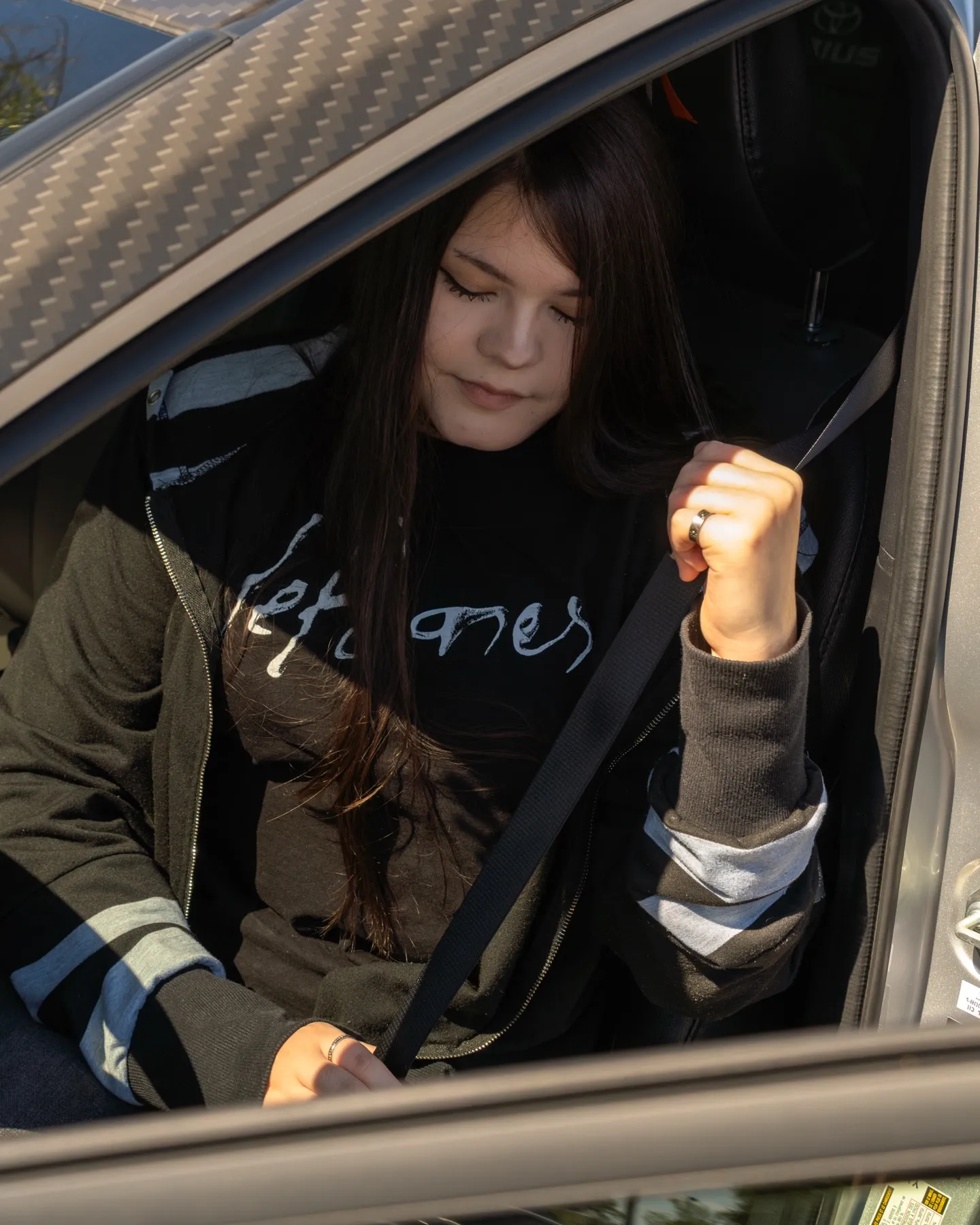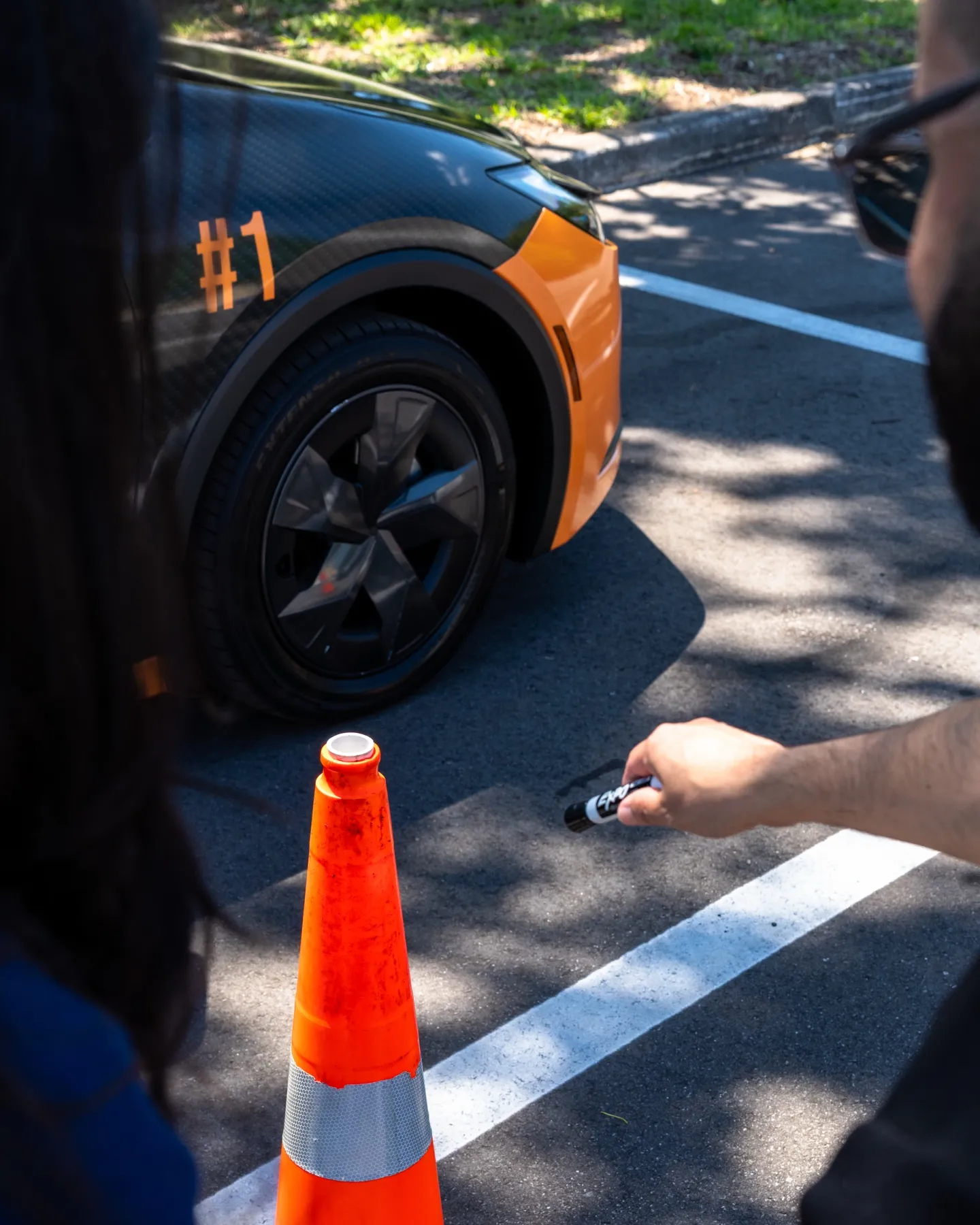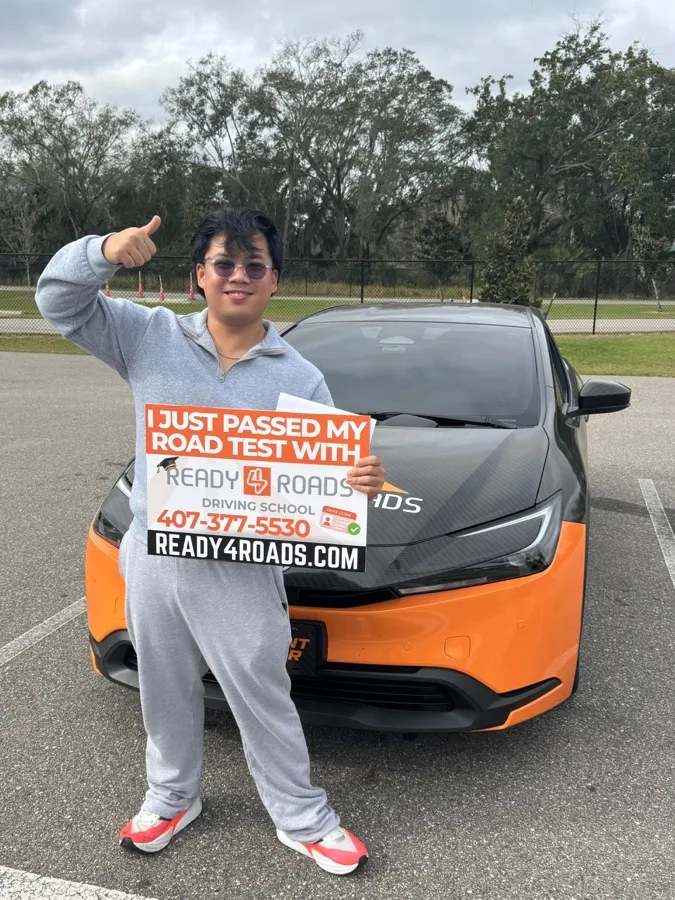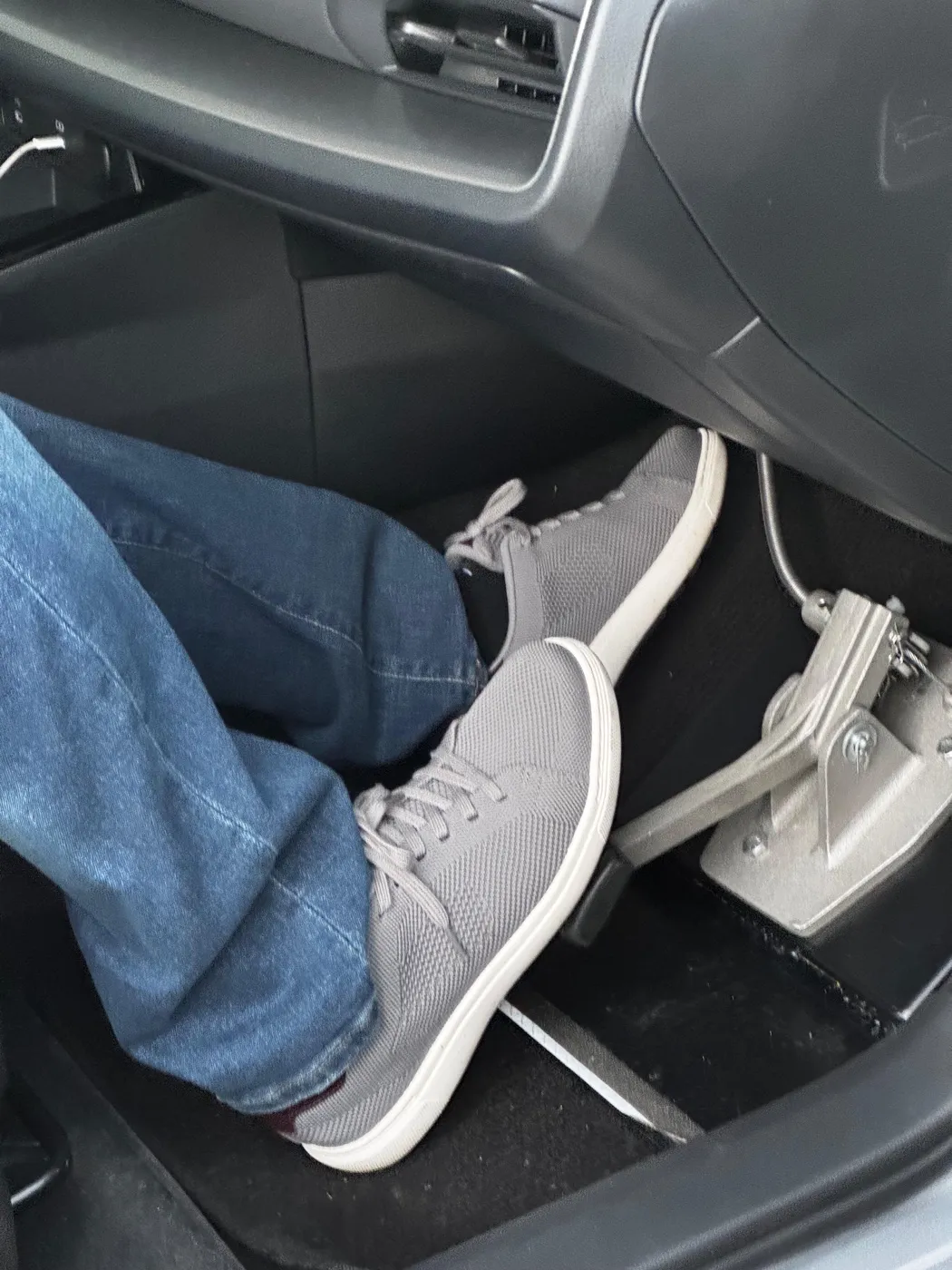
- Teens need at least 50 supervised hours, including 10 at night, before a Class E license.
- The supervisor must be a licensed driver 21 or older in the front passenger seat.
- Learner's license holders drive in daylight only for 3 months, then until 10 p.m.
- A responsible adult over 21 signs form HSMV 71143 in front of an examiner or before a notary.
- A moving-violation conviction can delay the license by one year from the conviction date.
How many supervised driving hours does a Florida teen need?
A Florida teen needs at least 50 hours of supervised driving, including at least 10 hours at night, before a 16- or 17-year-old can get a Class E license. A parent, guardian or other responsible adult certifies those hours, and every one of them must be driven with a licensed driver 21 or older. As a driving school in Kissimmee, we recommend planning them from day one and pairing them with teen driver education in Kissimmee.
The hours are built during the 12 months a teen holds the learner's license. Spread over a year, 50 hours works out to about one hour a week, and the 10 night hours can only start once night driving is allowed (more on that below).
The clock starts with the learner's license itself. A teen can get one at 15 after passing the knowledge exam and the vision and hearing exam and completing an approved driver education course, which for first-time applicants under 18 is the 6-hour DETS.
Who is allowed to supervise a teen with a learner's license?
Florida law sets three conditions for the person in the passenger seat:
- They hold a valid license for the type of vehicle being driven.
- They are at least 21 years old.
- They sit in the closest seat to the right of the driver, which is the front passenger seat.
The supervisor does not have to be a parent; any licensed driver who meets those conditions can ride along. The adult who certifies the 50 hours is a parent, guardian or other responsible adult over 21.
Breaking the supervision or time rules carries the civil penalty for a moving violation, so treat them as seriously as any other traffic law. If the supervising adult feels nervous, start with short daytime drives in an empty parking lot before moving into traffic.
When can a teen with a learner's license drive?
- First 3 months: daylight hours only.
- After 3 months: until 10 p.m.
That timing shapes the log. Night hours can only be logged after the first three months, after dark and before 10 p.m., so plan them for months four through twelve. Leaving all 10 night hours for the last few weeks before the road test is the easiest way to fall behind.
Use the hours to cover what the road test checks: a three-point turn, backing about 50 feet while looking to the rear (no mirror or backup camera), parking on a grade, stopping quickly and keeping at least a four-second following distance.
How do you log the hours, and who signs the certification form?
The Florida DMV posts a printable Learner's License Driving Log you can use to track sessions. Any log is most useful when it is filled in right after each drive. We suggest noting:
- The date and how long you drove.
- Whether it was day or night.
- Where you drove and what you practiced, such as parking, highway driving or rain.
- The supervising driver's name.
The form the state requires is the Certification of Minor Driving Experience (HSMV 71143). A responsible adult over 21 signs it in front of a driver license examiner or has it notarized, and teens who are 16 or 17 present it for the road test.
Earlier, for the learner's license itself, a parent or legal guardian signs the Parental Consent Form (HSMV 71142). A step-parent may sign only if they legally adopted the teen. Both forms are listed on the Florida DMV's required forms page for teens.
On road test day, the teen also brings a vehicle with valid registration and proof of insurance that passes a basic inspection. No other passengers are permitted during the exam, so the adult who logged the hours does not ride along.
How long must a teen hold the learner's license before the road test?
Twelve months from the date it was issued, or until the teen turns 18, whichever comes first. Before the Class E license, the teen must also:
- Have no moving-violation convictions in the 12 months after the learner's license was issued (one is allowed if adjudication was withheld).
- Have the 50 hours, 10 at night, certified on HSMV 71143.
- Comply with school attendance requirements.
Before any of this, first-time applicants under 18 complete the 6-hour DETS course, required since August 1, 2025. We offer it as an online 6-hour DETS course from American Safety Institute.
What happens if a teen gets a ticket with a learner's license?
A moving-violation conviction resets the clock: it prevents the license from being issued for one year from the conviction date. For a noncriminal moving ticket, a learner's license holder can elect a Basic Driver Improvement (BDI) course, so the ticket does not count as a conviction and the 12-month clean period continues.
The election has rules: it must be made within 30 days of the citation, it is allowed once every 12 months, and it is not available for criminal violations or for speeding 30 mph or more over the limit. We offer the Basic Driver Improvement course online.
Points matter too. A driver under 18 who gets 6 or more points in 12 months is automatically restricted to Business Purposes Only for one year, plus 90 days for each additional point. And any driver under 21 with a blood alcohol level of .02 or higher gets an automatic six-month suspension.
What changes once the teen has a Class E license?
- Age 16: may drive alone from 6 a.m. to 11 p.m.
- Age 17: may drive alone from 5 a.m. to 1 a.m.
- Age 18: no time restrictions.
Outside those hours, a 16- or 17-year-old may drive only to or from work, or with a licensed driver 21 or older. Driving during restricted hours adds 3 points to the record. And every passenger under 18 must wear a seat belt, on every trip.
01Can a teen drive to school alone with a learner's license?
02Does the 50-hour certification apply to an 18-year-old applicant?
03Can a grandparent supervise practice drives?
04Where does a teen take the road test in Osceola County?
- Florida DMV: teen licensing requirements and driving curfews
- Florida DMV: required forms for teens
- Florida DMV: licensing frequently asked questions
- Florida DMV: Learner's License Driving Log (PDF)
- Florida DMV: Driver Education Traffic Safety (DETS) course
- Florida DMV: Basic Driver Improvement (BDI) course
- Florida Statutes s. 322.1615: learner's driver license
- Florida Statutes s. 318.14: noncriminal traffic infractions
- Osceola County Tax Collector: Class E driving skills test requirements (PDF)